Parenting
0 min read
Breast milk for baby acne: Does it really work?

Medically Reviewed Dr. Hannah Kopelman, Dermatologist
Written by Cradlewise Staff
If your newborn suddenly develops tiny red bumps or pimples on their face, it can be surprising for new parents. Many babies experience baby acne, a common skin condition that usually appears within the first few weeks after birth.
Although it may resemble teenage acne, baby acne is typically harmless and temporary. Understanding what baby acne looks like, what causes it, and how it differs from other newborn rashes can help parents feel more confident in caring for their baby’s delicate skin.
This blog explores what science really says about breast milk and baby acne, with expert insights from dermatologist Dr. Hannah Kopelman.
What is baby acne?
Baby acne is a common newborn skin condition that causes small red or white pimples on a baby’s face, usually appearing within the first few weeks after birth. It’s harmless and temporary, and most cases clear up on their own without treatment.
- Neonatal acne: The American Academy of Dermatology Association notes that about 20% of newborns have a type of acne called neonatal acne. You usually see them on your newborn’s face about 2 weeks of age, but they can develop anytime before 6 weeks. It usually resolves by 4 months of age and rarely requires treatment.
- Infantile acne: It starts a little later, usually between 2 months to 1 year, and can sometimes last longer, even needing treatment.
What causes baby acne?
Baby acne is primarily believed to be caused by maternal hormones that pass from the placenta to your baby during pregnancy, which can stimulate your baby’s oil glands. These hormonal changes may temporarily clog pores and lead to small pimples or bumps on the skin.
It’s a common myth that breast milk dripping on your baby’s face causes it. No! Your breast milk touching your baby’s face is not the reason why your baby has acne. Also, it’s not from leftover shampoo. So you can cross those worries off your list; this isn’t something you caused.
What does baby acne look like?
Baby acne typically appears as tiny red or white pimples, bumps, or pustules on a newborn’s face, especially on the cheeks, nose, forehead, and chin. In some cases, the bumps may also appear on the scalp, neck, chest, or upper back.
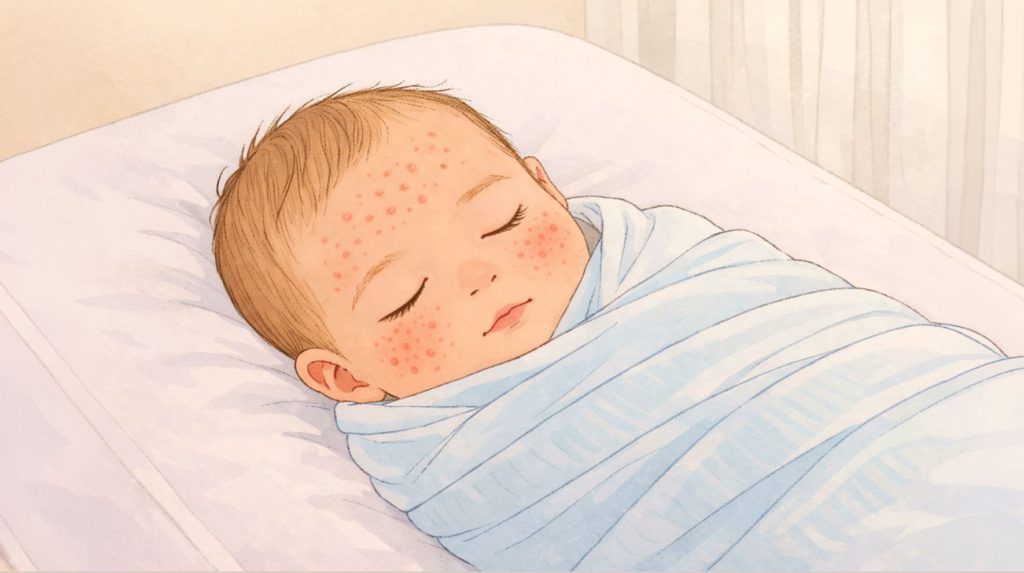
Common features of baby acne include:
- Small red or pink bumps on the skin
- Whiteheads or pus-filled pimples (pustules)
- Mild redness around the bumps
- Breakouts mainly on the cheeks, nose, and forehead
- Skin that may look more irritated when the baby cries or gets warm
Unlike acne in teenagers, baby acne does not usually include blackheads or clogged pores and rarely causes scarring.
The condition often appears around 2 to 6 weeks after birth and usually clears up on its own within a few weeks to a few months.
Does breast milk help baby acne?
Breast milk is sometimes used as a home remedy for baby acne because it contains natural antibodies and antimicrobial properties that may soothe irritated skin. However, there is limited scientific evidence that it effectively treats baby acne, and most pediatricians recommend gentle cleansing and allowing the condition to clear on its own.
Some parents swear by dabbing breast milk on baby acne, hoping it will clear the bumps. The idea comes from a few logical clues:
- Because breast milk contains antibodies and naturally occurring antimicrobial agents, it might help reduce bacteria on the skin.
- It also has factors that support skin healing and reduce irritation or inflammation.
- And since it’s something the baby is already ingesting, many parents assume using it externally is low risk.
That said, these are theoretical benefits. No scientific evidence exists that breast milk clears or prevents baby acne. At best, it may soothe your baby’s skin, but it isn’t a proven treatment.
How to apply breast milk on baby acne?
If you check with your pediatrician and decide to apply breast milk to your baby’s acne, here are some gentle tips:
- Use fresh milk: Use milk that’s been expressed just before applying; avoid using milk that’s been stored.
- Clean hands & clean tools: Wash your hands thoroughly, and use a clean cotton swab or pad.
- Test a small patch first: Apply to a tiny area for a day or so, and watch for any worsening or irritation. As Dr. Hannah notes, “What parents sometimes notice is that breast milk contact on the skin can soothe or, in other cases, slightly irritate depending on how the skin reacts.“
- Stop if any irritation occurs: Such as redness, swelling, or worsening of bumps.
- See a doctor if needed. If the acne gets severe, crusty, or looks infected, seek professional advice.
How to treat baby acne?
Most cases of baby acne clear up on their own within a few weeks. So the best approach is patience. In the meantime:
- Wash the baby’s face daily with warm water and a mild, fragrance-free cleanser.
- Pat the skin dry gently – no scrubbing needed.
- Keep the baby’s face clean and dry, especially after feeding.
- Skip fancy creams or treatments; for newborn skin, less is more.
Dr. Kopelman reiterates, “The most important thing is not to blame yourself or feel like you need to intervene aggressively. With time and gentle care, your baby’s skin will smooth out on its own.”
What not to do with baby acne?
- Picking, popping, or squeezing the acne. Yes, it’s tempting. No, don’t do it.
- Using harsh lotions, oils, or over-the-counter acne treatments. Baby skin isn’t ready for benzoyl peroxide boot camp.
- Scrubbing the area infected with acne.
- Bathing your newborn with hot water (use lukewarm water only).
- Panicking if it looks worse before it gets better. This is normal.
How to prevent baby acne?
Baby acne can appear no matter what you do, and that’s completely normal.
But there are a few simple steps you can take to keep it from getting worse:
- Dress the baby in soft, breathable cotton.
- Avoid overheating and stuffy rooms.
- Keep laundry detergents fragrance-free.
- Gently clean milk dribble and drool from baby’s face using a damp soft cotton wool or a muslin cloth.
- Stick to simple skincare: no extra oils or lotions unless your pediatrician recommends.
How long does baby acne last?
Baby acne usually clears up on its own without treatment. In most cases, it appears within the first two to four weeks after birth and gradually improves over the next few weeks to a few months. Sometimes, baby acne may take 6 months to a year to clear up.
For many babies, the bumps fade as their hormone levels stabilize and their oil glands become less active. During this time, the acne may look slightly more noticeable when the baby cries, gets warm, or has irritated skin, but it typically resolves naturally without leaving scars.
When to seek intervention from an expert
Sometimes it’s not acne at all, but another skin condition like eczema or an infection and your doctor can help tell the difference.
Call your pediatrician if:
- The acne is severe or spreading beyond the face.
- It lasts longer than 6 weeks..
- It looks painful, crusty, or infected.
- The acne is leaving scars.
Baby acne vs rash
Baby acne and newborn rashes can sometimes look similar, but they have different causes and appearances. Common newborn rashes often show up as flat red patches or tiny bumps that may spread across the body due to reasons, including drooling and heat rash. Rash may cover more body parts rather than just the face and upper torso. Also, certain rashes are followed by fever, especially roseola rash and measles.
Unlike many rashes, baby acne typically isn’t itchy and usually clears on its own within a few weeks.
Baby acne vs eczema
Baby acne and eczema are both common skin conditions in infants, but they look and behave differently. Unlike baby acne, eczema typically appears later as dry, red, itchy patches of skin on areas like the cheeks, scalp, elbows, or knees. Eczema is often itchy and uncomfortable, while baby acne is harmless.
While baby acne usually resolves on its own, eczema may require moisturizing treatments or medical advice if symptoms persist.
Conclusion
Baby acne is a very common newborn skin condition and, although it can look concerning at first, it is usually harmless and temporary. In most cases, the small pimples appear during the first few weeks of life and clear up on their own without treatment.
If your baby develops bumps on their skin, understanding the difference between baby acne, eczema, and other newborn rashes can help you know what’s normal and when to speak with a pediatrician. With gentle skin care and a little patience, your baby’s skin will usually clear up naturally over time.
FAQs
Q: 1. When does baby acne usually appear?
A: Baby acne often shows up around 2–4 weeks of age. It can last for a few weeks, sometimes up to a few months. It usually fades on its own without treatment.
Q: 2. Will baby acne leave scars?
A: Typical baby acne does not scar. It usually fades completely without leaving marks. If scarring ever appears, consult a dermatologist – it may not be standard newborn acne.
Q: 3. Can I put breast milk on my baby’s face for acne?
A: Yes, many parents try it, and small studies suggest breast milk is safe on intact baby skin. But no clinical studies show it works for acne.
Q: 4. Are there natural remedies besides breast milk?
A: Some parents try coconut oil or gentle emollients, but these aren’t proven either. The safest natural “remedy” is usually time.
Q: 5. Should I wash my baby’s face more often to help acne?
A: No need for extra washing. Once a day with warm water is enough. Over-washing can dry out or irritate delicate skin, which may make acne look worse.
Q: 6. Can kisses cause baby acne?
A: No, kisses do not cause baby acne. Baby acne is mainly linked to hormonal changes in newborns, although irritation from saliva, lotions, or rough fabrics can sometimes make the bumps look more noticeable.
Q: 7. How to clear up baby acne overnight?
A: There is no safe way to clear baby acne overnight. The best approach is gentle cleansing with warm water and mild baby soap, while avoiding oils or harsh skincare products, and letting the condition clear naturally over time.
Sources:
- When does baby acne occur?. AAD. Is that acne on my baby’s face?
- How to treat baby acne? AAP. First Month: Physical Appearance and Growth.
- Neonatal acne. National Library of Medicine. 2016. Infantile acne.
- Acne in newborn. NCBI. 2021. Acne in the newborn.
You may also like:
You may also like


